
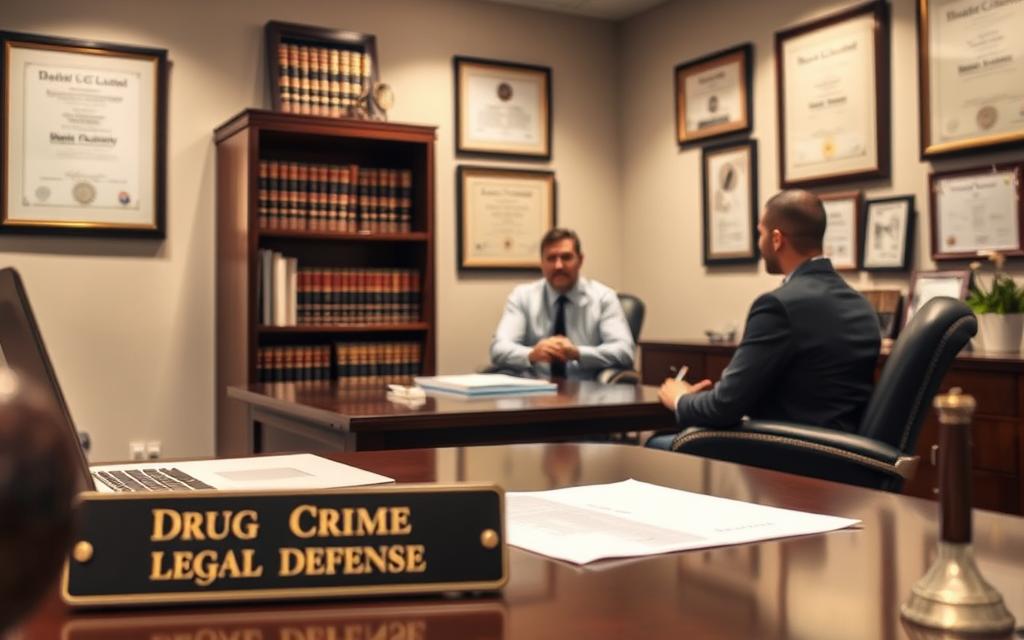

Are you facing drug-related criminal charges? These could ruin your life. Knowing how important drug crime attorneys are might save your future and rights.
Drug offenses are complex. You need experts to help you. They know how to defend you well.
Drug charges can be serious. They can affect your life a lot. Good lawyers guide you through this. They make a plan just for you.
Key Takeaways
- Drug crime attorneys specialize in complex legal defense strategies
- Early legal intervention can significantly impact case outcomes
- Understanding your rights is key in drug-related legal proceedings
- Professional legal help can lessen penalties
- Every drug crime case needs a custom defense plan
Understanding Drug Crimes
Drug crimes are complex. They involve legal definitions, classifications, and consequences. These crimes affect thousands in the U.S. each year.
Drug crimes include many illegal activities. They range from small possession to big trafficking operations.
Types of Drug Crimes
- Possession: Holding illegal substances for personal use
- Distribution: Selling or transferring controlled substances
- Manufacturing: Creating illegal drugs or chemical compounds
- Trafficking: Large-scale transportation and distribution of drugs
- Conspiracy: Planning or agreeing to commit drug-related offenses
Federal vs. State Drug Offenses
Drug crimes can be tried at different levels. Federal cases usually involve big amounts or cross-state lines. State cases often deal with smaller amounts and local sales.
Common Drug Charges
People might face charges for different drugs. This includes marijuana, cocaine, heroin, methamphetamine, and prescription drugs. The drug and amount can change the legal penalties.
It’s important to know these details if you’re facing drug charges. Each case is different. It needs careful legal review and a good defense plan.
The Role of Drug Crime Attorneys
Drug crime attorneys help people in tough legal spots. They guide them through the complex criminal justice system. This is very important.
Lawyers who focus on drug crimes have special skills. They protect their clients’ rights and plan smart legal moves.
What Drug Crime Attorneys Actually Do
These lawyers do many important things:
- They look at case details and find weak spots.
- They check how police work.
- They question how evidence is collected.
- They talk about possible plea deals.
- They stand up for their clients in court.
Why Experienced Legal Representation Matters
An experienced drug crime attorney knows how to win cases. They understand drug laws well. This helps them find defenses others might miss.
Selecting the Right Attorney
Choosing the right drug crime attorney is important. Look for:
- A good track record in drug crime defense.
- Knowledge of drug laws at all levels.
- Experience in court.
- Clear communication.
- Keeping client secrets.
Good lawyers are both smart and caring. They help people get through tough legal times.
Criminal Defense Strategies
Dealing with drug crime charges needs a smart plan. Lawyers know that winning a case is more than just talking. Each case needs a special plan based on the facts and evidence.
Common Defense Strategies for Drug Crimes
Defense plans for drug crimes can be different for each case. Lawyers often use several main strategies:
- Challenging the legality of search and seizure procedures
- Questioning the chain of evidence custody
- Proving lack of intent or knowledge
- Demonstrating possible entrapment
- Challenging the accuracy of drug testing methods
Role of Evidence in Defense
Evidence is very important in defending against drug charges. Forensic analysis, witness testimonies, and documents can change how a case goes. Lawyers look at all evidence to find weak spots in the prosecution’s case.
Importance of Expert Witnesses
Expert witnesses give important details that can question the prosecution. They might be forensic scientists, toxicologists, or law experts. They can give strong support to the defense.
Choosing the best defense strategy needs a lot of legal knowledge and planning. Working with a skilled drug crime lawyer can help get a good outcome.
Consequences of Drug Convictions
Drug convictions change lives in big ways. They affect personal, work, and social life. It’s like a big wave that hits hard.

Sentencing Guidelines
Courts have rules for drug sentences. They look at:
- Type and amount of drug
- Any past crimes
- How the arrest happened
- If you can change
| Drug Classification | Potential Sentence | Minimum Mandatory Time |
|---|---|---|
| Schedule I Drugs | 5-40 years | 5 years |
| Schedule II Drugs | 3-20 years | 3 years |
| Schedule III Drugs | 1-10 years | 1 year |
Impact on Criminal Record
A drug conviction stays on your record forever. Background checks can show it. This might stop you from getting jobs or places to live.
Long-Term Effects on Life and Employment
Drug convictions block many doors:
- You might not get jobs
- Finding a place to live is hard
- You could lose your professional license
- Getting school loans is tough
- Getting loans is hard
Knowing these effects shows why fighting drug charges is so important.
The Legal Process for Drug Crimes
Going through a drug crime case can feel scary and confusing. An experienced lawyer is like a guide for you. They help protect your rights and plan a strong defense.
Knowing what to expect can help you feel less worried. Drug crime cases have a clear path. You need a good lawyer to help you through it.
Key Steps in a Drug Crime Case
- Initial arrest and booking
- Preliminary hearing
- Arraignment
- Pre-trial motions
- Trial preparation
Pre-Trial Procedures
Before the trial, there are important steps. Your lawyer will work on several key things:
- Evidence review to find weak spots in the prosecution’s case
- Filing motions to keep out bad evidence
- Talking about possible plea deals
Going to Trial: What to Expect
When a case goes to trial, several important steps happen. First, there’s jury selection. Lawyers pick the right people to decide the case.
Then, the prosecution shows its evidence. After that, the defense gets to question the prosecution’s witnesses. Your lawyer will try to weaken their case.
Next, the defense presents its own evidence. They might call experts or tell a different story. Closing arguments summarize each side’s points.
The judge tells the jury how to think about the case. The jury then decides what happens next. They can choose to acquit, convict, or even dismiss the case.
A skilled lawyer can really help at each step. They fight for your rights and aim for the best outcome.
Caring for Your Health During Legal Trouble
Legal troubles can be very hard on your mind and body. The stress of facing legal issues can be overwhelming. It’s very important to take care of your health during this time.
Legal battles can make you feel very emotional. It’s key to know these feelings and take care of yourself.
Strategies for Managing Stress and Anxiety
Managing stress is very important when dealing with legal issues. Here are some helpful tips:
- Practice daily meditation and mindfulness exercises
- Engage in regular physical activity
- Maintain a consistent sleep schedule
- Limit caffeine and alcohol consumption
- Seek professional counseling services
Importance of Mental Health Support
Getting help from mental health professionals is very important. They know how to help with the stress of legal troubles.
| Support Resource | Benefits |
|---|---|
| Individual Therapy | Personalized coping strategies |
| Support Groups | Shared experiences and emotional validation |
| Online Counseling | Flexible and confidential support |
Remember, protecting your mental health is not a sign of weakness but a strategic approach to navigating challenging legal circumstances.
The Costs of Hiring Drug Crime Attorneys
Dealing with drug crime legal issues can be very expensive. It’s important to know how much it costs to hire a drug crime lawyer. This is key for people facing legal trouble.
Getting legal help comes with many costs. These costs can affect your defense plan and how your case ends.
Typical Fee Structures
Lawyers for drug crimes use different ways to charge:
- Hourly Rates: Most common, costs $150-$500 per hour
- Flat Fees: A set price for certain legal services
- Retainer Fees: An upfront payment for ongoing help
Worth of Investing in an Attorney
Legal help costs money, but it’s worth it. Good lawyers can really change your case’s outcome.
| Investment Level | Potential Case Benefits | Estimated Cost Range |
|---|---|---|
| Basic Defense | Reduced charges | $2,000-$5,000 |
| Comprehensive Defense | Potential case dismissal | $5,000-$15,000 |
| Complex Litigation | Minimal sentencing | $15,000-$50,000 |
Good legal help can save a lot of money in the long run. It can avoid long legal fights or harsh sentences.
Working with Your Attorney
Handling a drug crime case needs a smart plan with your lawyer. The bond between you and your lawyer is key to a strong defense. Choosing the right lawyer can greatly change your case’s outcome.

Before your first meeting, plan well and gather important info. Don’t talk to the police or others without a lawyer. This first meeting is to build trust and understanding.
Preparing for Your Consultation
- Collect all important papers about your case
- Gather info from witnesses
- Write down what happened in order
- Bring any physical evidence that helps your case
Critical Questions to Ask Your Attorney
- What experience do you have with cases like mine?
- What defense strategies do you suggest?
- What could happen in my case?
- How will you keep me updated during the case?
Call a lawyer right away to talk about your case and plan a defense. Collect evidence carefully, like witness statements and video. Work closely with your lawyer to make a strong defense and get ready for court.
Maintaining Open Communication
Your lawyer is there to defend you, not judge you. Drug charges are serious, and a good lawyer knows every case is different. Keep communication open, answer quickly, and share all case details. This teamwork makes your defense stronger.
The Role of Plea Bargaining
Dealing with drug crime charges can be tough. Plea bargaining is a key strategy for many. It’s a way to get a clearer legal outcome instead of a trial.
Understanding Plea Bargaining
Plea bargaining helps lower legal risks. It can also reduce the bad outcomes of a conviction. In cases of federal drug trafficking, good negotiation can cut down a long sentence a lot.
Pros of Accepting a Plea Deal
- Certainty of outcome, avoiding the unpredictability of trial
- Potentially reduced charges and lighter sentences
- Lower legal costs compared to going to trial
- Faster resolution allowing you to move forward with your life
- Reduced stress of avoiding a lengthy court process
Potential Drawbacks to Consider
- Giving up your right to a full trial
- Losing the possibility of complete acquittal
- Accepting a criminal conviction with possible long-term effects
- Potential risk of pleading guilty to something you didn’t do
Making an Informed Decision
The choice to take a plea deal is yours. But, it’s important to talk it over with your lawyer first. They can look at the case, guess how well you’ll do at trial, and see if the deal is fair.
| Consideration | Plea Bargain Impact |
|---|---|
| Sentencing Possible | Can greatly reduce prison time |
| Legal Costs | Way lower than trial costs |
| Personal Stress | Less worry and stress |
Getting advice from a lawyer is very important. Each case is different. You need a lawyer who knows how to handle your situation well.
How to Stay Informed About Your Case
Going through a drug crime case needs you to be involved and talk clearly with your lawyer. Knowing what’s going on can make you feel less stressed and help your defense.
To stay in the loop, you need to take steps to get the facts. Your lawyer is your main source of info. But, you can also do things to keep up with your case.
Seeking Transparency from Your Attorney
- Schedule regular check-in meetings
- Request detailed case updates
- Ask for explanation of legal terminology
- Obtain copies of all communications
Effective communication is key in legal matters. It’s okay to ask about your case, what might happen, or how your lawyer plans to defend you.
Understanding Court Documents
Court papers can be hard to understand because of all the legal terms. Here’s a simple guide to some important documents:
| Document Type | Purpose | What to Look For |
|---|---|---|
| Indictment | Formal criminal charge | Specific allegations against you |
| Discovery Documents | Evidence collected by prosecution | Potential defense strategies |
| Motion Filings | Legal requests to the court | Procedural developments |
Ask your lawyer to explain each document. They should tell you why it matters and how it could affect your case.
- Request written summaries of complex documents
- Keep a personal file of all legal paperwork
- Review documents together with your lawyer
Knowing what’s going on lets you help with your defense. It helps you make smart choices during the legal process.
Building a Support System
Dealing with drug crime legal issues can be tough. It’s important to have a strong support network. They can give you emotional strength, help with daily tasks, and keep your hope alive.
The Power of Family and Friends
Your closest friends and family are key. They can offer:
- Emotional comfort and understanding
- Practical help with daily tasks
- Money for legal costs
- Help getting to court
- Moral support when it’s hard
Discovering Community Resources
There are also community resources to help:
- Legal Support Groups: Groups focused on criminal defense
- Counseling Services: Mental health help for stress
- Community Centers: Places with guidance and help for recovery
- Support Networks: Groups of people facing similar issues
Building a strong support system helps a lot. Remember, you’re not facing this alone.
After Your Case: Moving Forward
Life after a drug case is tough. You need to be strong, plan well, and grow as a person. Learning to move forward can turn a bad experience into a chance for growth.

Lessons Learned from the Experience
Looking back at your legal journey teaches you a lot. You might learn:
- What triggers you and how to avoid them
- The value of having friends and family
- How to deal with stress in better ways
- The importance of listening to legal advice
Knowing yourself is key to avoiding more legal trouble. Talking to a counselor or joining a support group can help you deal with your feelings.
Rebuilding After a Conviction
Getting your life back on track takes effort. You should:
- Look for jobs that fit you
- Work on fixing any record issues
- Learn new skills for your career
- Make new friends who are positive
There are legal help and programs for rehabilitation. They can guide you through this hard time. Your past doesn’t mean you can’t have a bright future.
Resources for Drug Crime Victims
Dealing with drug crime legal issues can feel really tough. Many groups offer help and advice to those trying to move past these problems. They help with legal, emotional, and educational needs.
Legal aid groups are very important. They help people understand their rights and find good lawyers. The National Association of Criminal Defense Lawyers (NACDL) and the American Civil Liberties Union (ACLU) offer free or low-cost help. They give advice, find lawyers, and protect rights during tough times.
Legal Aid Organizations
Support groups and educational programs are also key. The Substance Abuse and Mental Health Services Administration (SAMHSA) has resources all over the country. They help with rehab, counseling, and recovery. These programs teach about rights, coping, and moving forward.
Support Groups and Educational Programs
Recovery and moving forward need many kinds of help. Local centers, online sites, and nonprofits offer workshops and counseling. They help people deal with legal issues and start new, positive lives.

